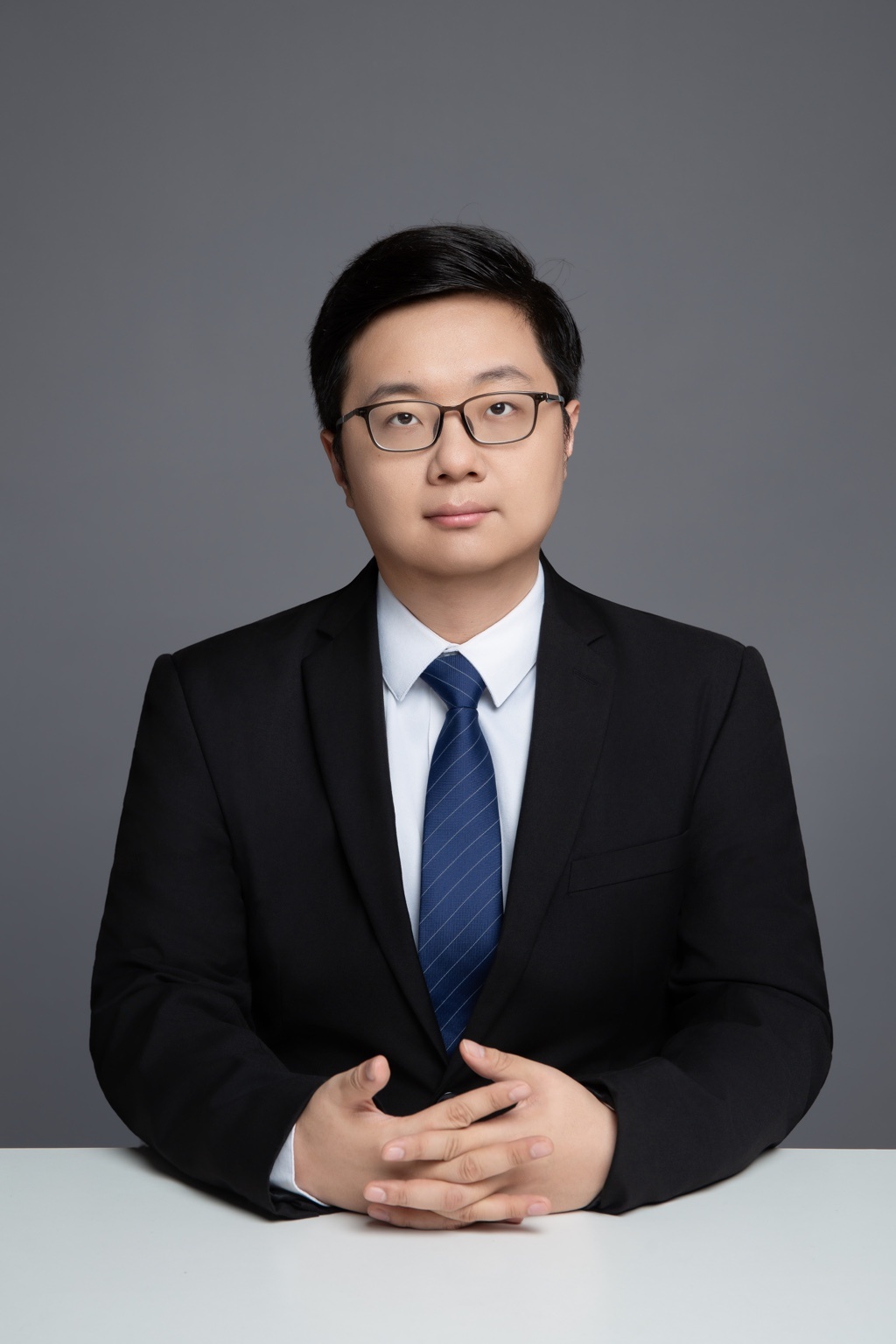
ZHE DONG, Ph.D.

‌Assoc. Prof.‌

Education Background


Zhe Dong received his B.S. degree from Peking University in 2012, where he conducted undergraduate research under the supervision of Professor Zhi-Xiang Yu. He then joined Professor Guangbin Dong’s laboratory, initially at the University of Texas at Austin and subsequently at the University of Chicago, where he earned his Ph.D. in 2018. In the same year, he moved to Princeton University to pursue postdoctoral research with Nobel Laureate Professor David W. C. MacMillan. In 2021, he joined Southern University of Science and Technology (in Shenzhen China) as an associate professor in the department of chemistry.


Research Background and Interests


During his doctoral studies with Professor Guangbin Dong, Dr. Zhe Dong pioneered the group’s research in palladium/norbornene (Pd/NBE) cooperative catalysis, developing new multicomponent cross-couplings and meta-selective arene C–H functionalization. During his postdoctoral research with Professor David W. C. MacMillan at Princeton University, he developed benzoxazolium salt-mediated deoxygenative coupling of alcohols. This approach has found broad application in pharmaceutical research, including parallel medicinal chemistry. His publications have received more than 4,000 citations.


His independent research centers on stereospecific transformations and main-group catalysis, guided by mechanistic understanding and molecular design. In stereospecific synthesis, his group develops reactions that transfer the stereochemical information of chiral starting materials into structurally distinct products through retention or predictable inversion of configuration. Rather than recreating chirality at each synthetic step, this approach treats it as a resource to preserve and repurpose. The group explores proximity control and mutual activation to favor productive bond formation over stereochemical scrambling, connecting readily accessible chiral feedstocks with new opportunities for carbon–carbon bond construction and skeletal reorganization. The broader objective is to expand synthetic reactivity while maintaining a predictable relationship between substrate and product stereochemistry.


In parallel, his group explores main-group elements as catalytic centers, including their use in molecular photoredox catalysis. By tuning electronic structure, coordination environments, and excited-state properties, the group seeks new pathways for selective bond activation, radical generation, and bond formation. Particular interests include integrating Lewis acid activation with light-driven electron transfer. The aim is not simply to replace established catalysts, but to discover reactivity enabled by the distinctive chemistry of main-group elements.


His honors include the Yang Cao-Lan-Xian Best Thesis Award from the University of Chicago (2018) and the Asian Core Program Lectureship Award (2025). He was also selected as a Reaxys PhD Prize finalist in 2017 and a Chem–Reaxys Symposium Honorary Lecturer in 2022.

ZHE DONG

ZHE DONG, Ph.D.

‌Assoc. Prof.‌

Education Background


Zhe Dong received his B.S. degree from Peking University in 2012, where he conducted undergraduate research under the supervision of Professor Zhi-Xiang Yu. He then joined Professor Guangbin Dong’s laboratory, initially at the University of Texas at Austin and subsequently at the University of Chicago, where he earned his Ph.D. in 2018. In the same year, he moved to Princeton University to pursue postdoctoral research with Nobel Laureate Professor David W. C. MacMillan. In 2021, he joined Southern University of Science and Technology (in Shenzhen China) as an associate professor in the department of chemistry.


Research Background and Interests


During his doctoral studies with Professor Guangbin Dong, Dr. Zhe Dong pioneered the group’s research in palladium/norbornene (Pd/NBE) cooperative catalysis, developing new multicomponent cross-couplings and meta-selective arene C–H functionalization. During his postdoctoral research with Professor David W. C. MacMillan at Princeton University, he developed benzoxazolium salt-mediated deoxygenative coupling of alcohols. This approach has found broad application in pharmaceutical research, including parallel medicinal chemistry. His publications have received more than 4,000 citations.


His independent research centers on stereospecific transformations and main-group catalysis, guided by mechanistic understanding and molecular design. In stereospecific synthesis, his group develops reactions that transfer the stereochemical information of chiral starting materials into structurally distinct products through retention or predictable inversion of configuration. Rather than recreating chirality at each synthetic step, this approach treats it as a resource to preserve and repurpose. The group explores proximity control and mutual activation to favor productive bond formation over stereochemical scrambling, connecting readily accessible chiral feedstocks with new opportunities for carbon–carbon bond construction and skeletal reorganization. The broader objective is to expand synthetic reactivity while maintaining a predictable relationship between substrate and product stereochemistry.


In parallel, his group explores main-group elements as catalytic centers, including their use in molecular photoredox catalysis. By tuning electronic structure, coordination environments, and excited-state properties, the group seeks new pathways for selective bond activation, radical generation, and bond formation. Particular interests include integrating Lewis acid activation with light-driven electron transfer. The aim is not simply to replace established catalysts, but to discover reactivity enabled by the distinctive chemistry of main-group elements.


His honors include the Yang Cao-Lan-Xian Best Thesis Award from the University of Chicago (2018) and the Asian Core Program Lectureship Award (2025). He was also selected as a Reaxys PhD Prize finalist in 2017 and a Chem–Reaxys Symposium Honorary Lecturer in 2022.